Internal tool · OperationsFull-stack
Uri Admin Console
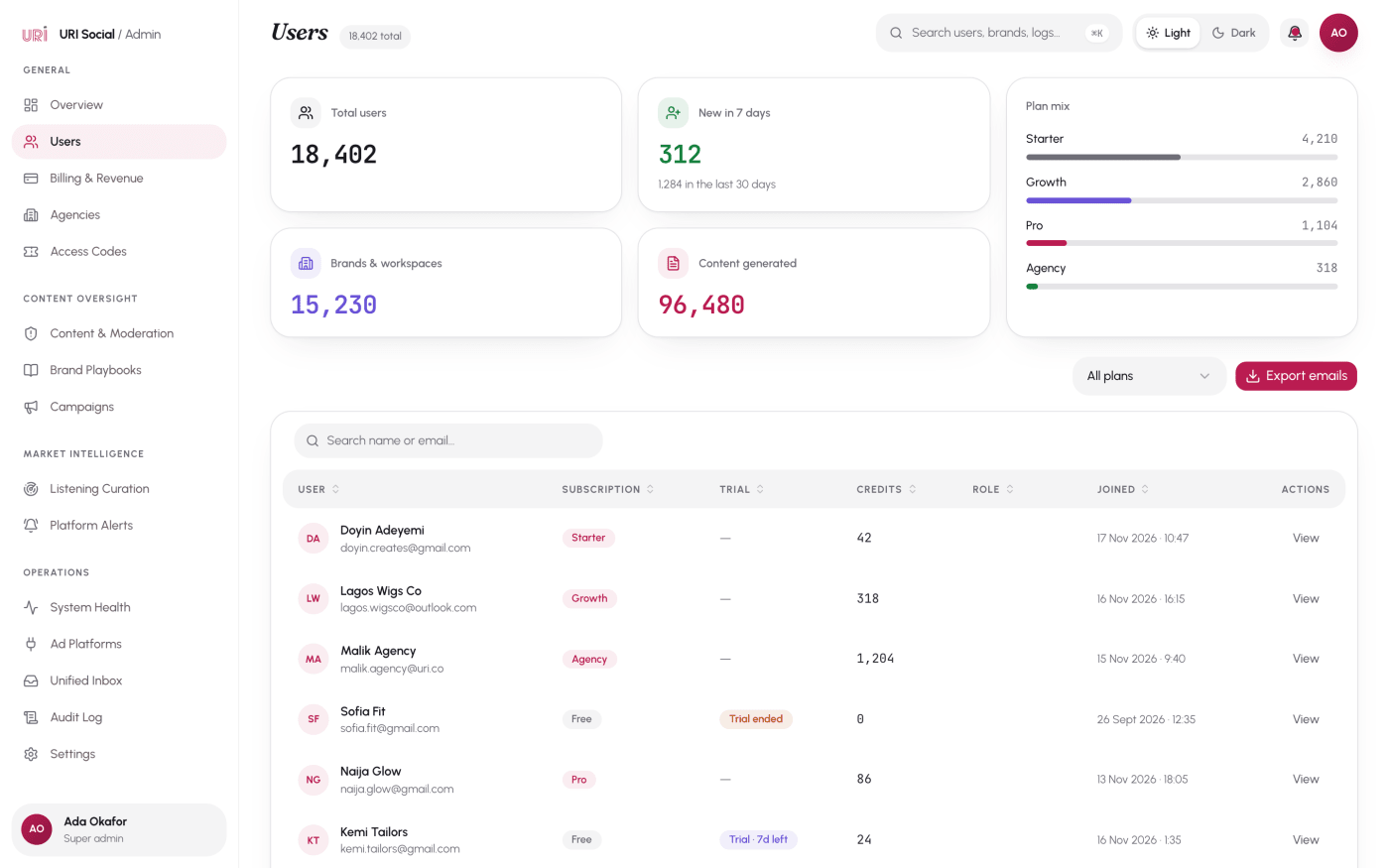
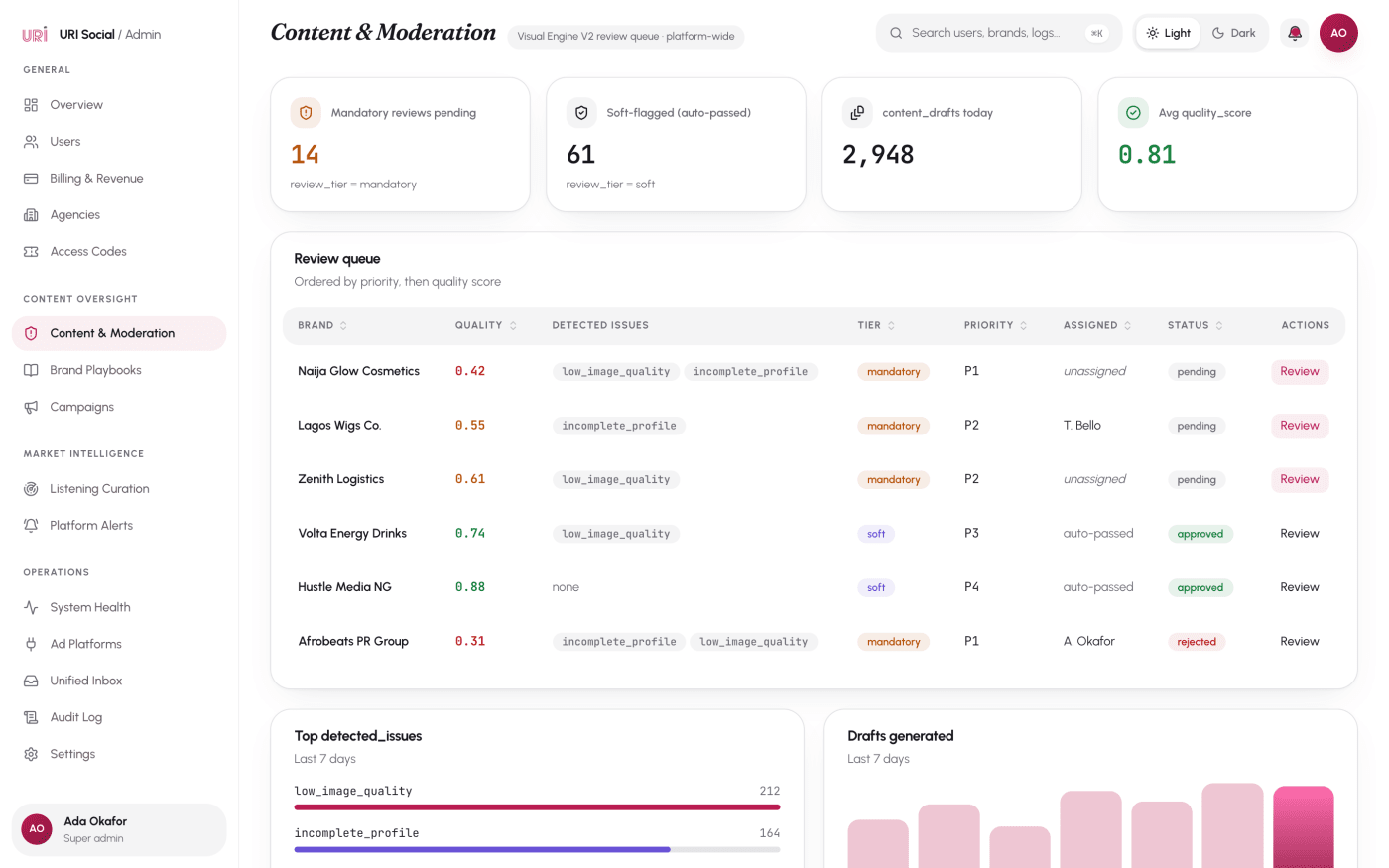
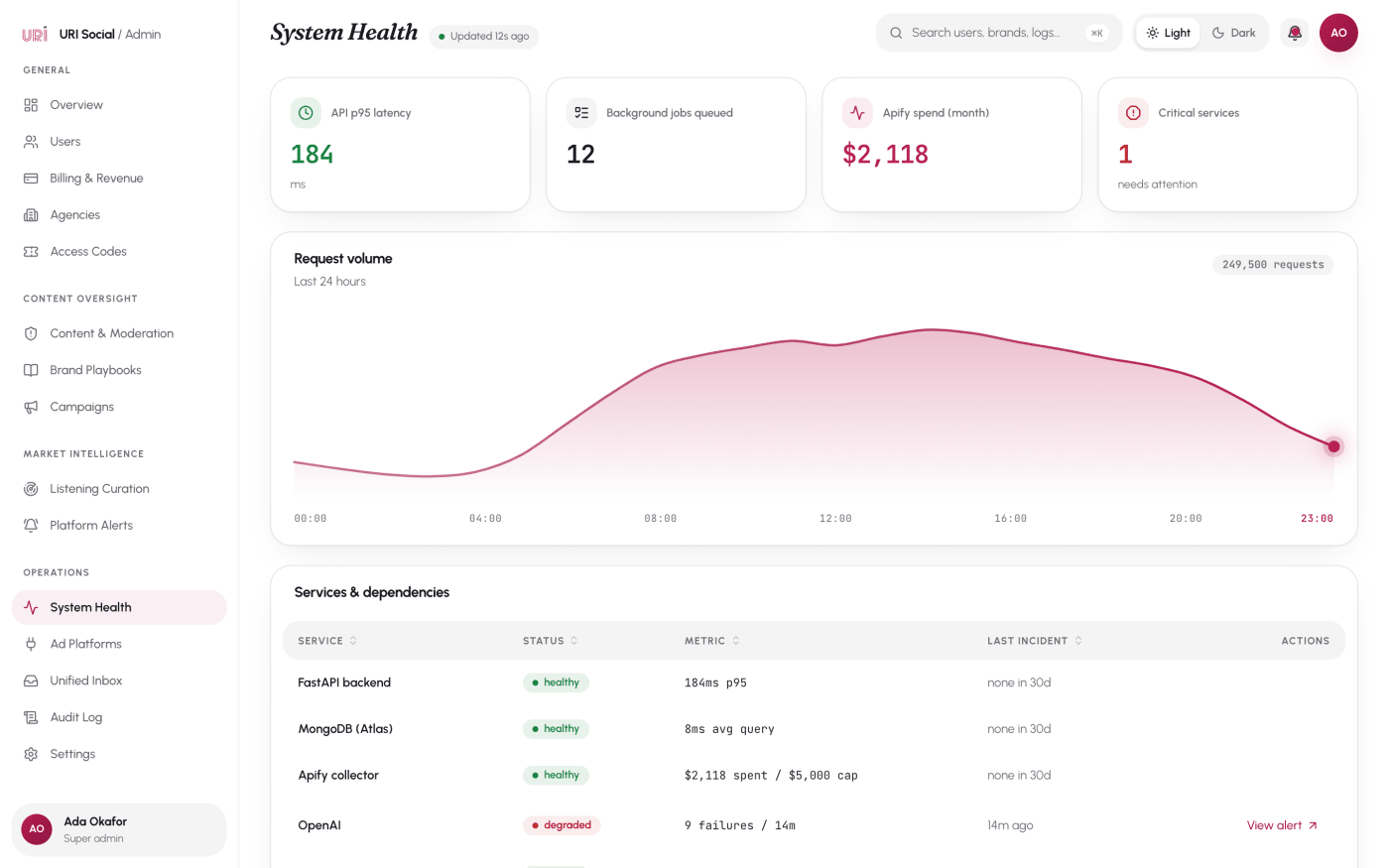
The operations console for Uri's own team: users, billing, agencies, content moderation, ad campaigns, market listening, alerts and platform health in one audited place. The account administration inside Uri is live; the standalone console's front end is complete and being connected to the backend.
- Status
- In progress
- Built for
- Uri
- Role
- CTO: built the standalone console and the live admin screens inside Uri
- Timeline
- Oct 2026

Built with
- Next.js
- TypeScript
- shadcn/ui
- Tailwind CSS
- TanStack Table
- Zod
The evidence
My part
CTO: built the standalone console and the live admin screens inside Uri
- Built the standalone console: 17 sections, the design system, the data layer and every screen
- Built the live admin inside Uri: user management, subscription and credit controls, access codes, ad-wallet top-ups and account deletion
- Designed every section to read through one typed server function shaped like the planned API
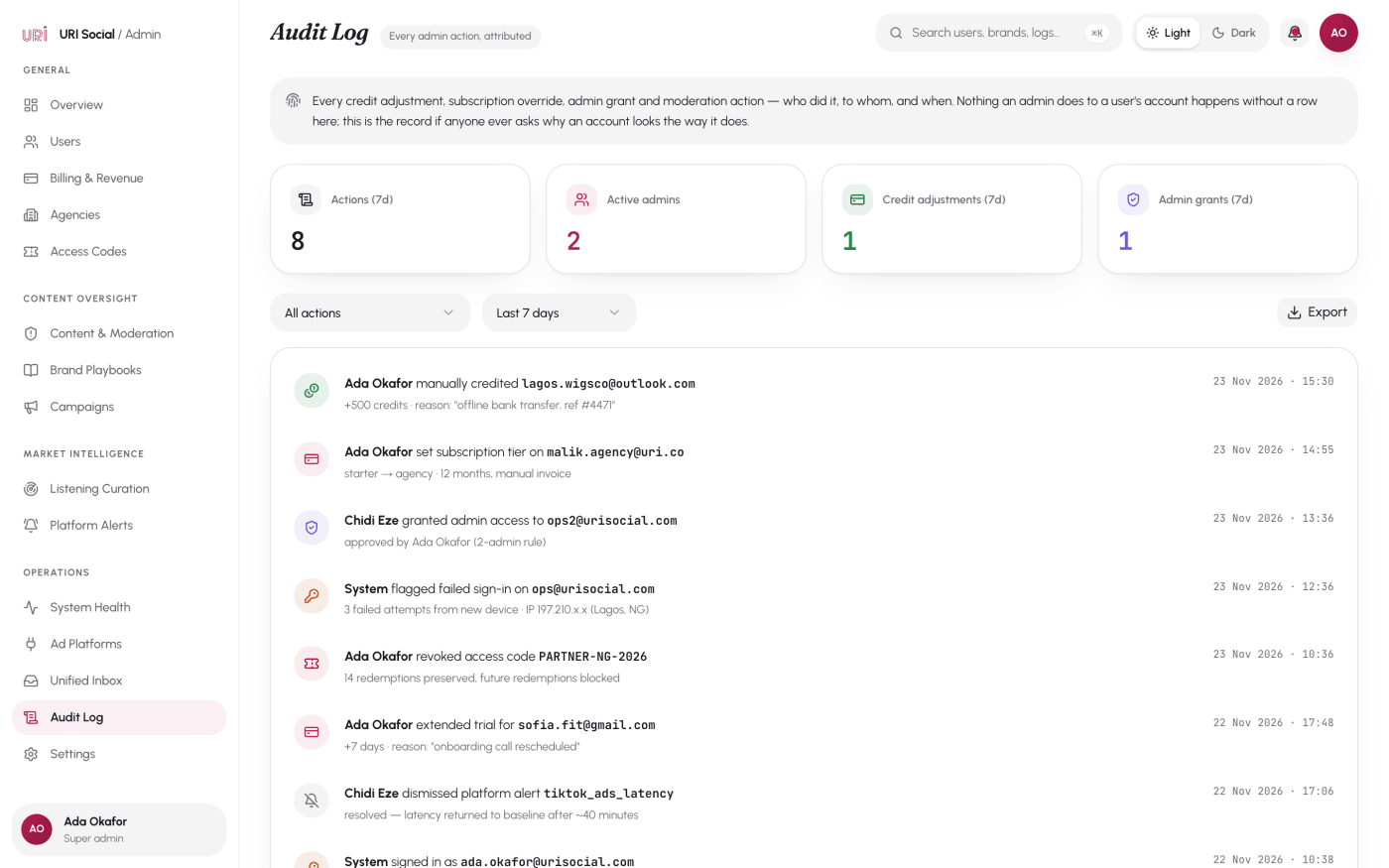
- Built the audit log: every credit adjustment, plan override, admin grant and moderation action is attributed
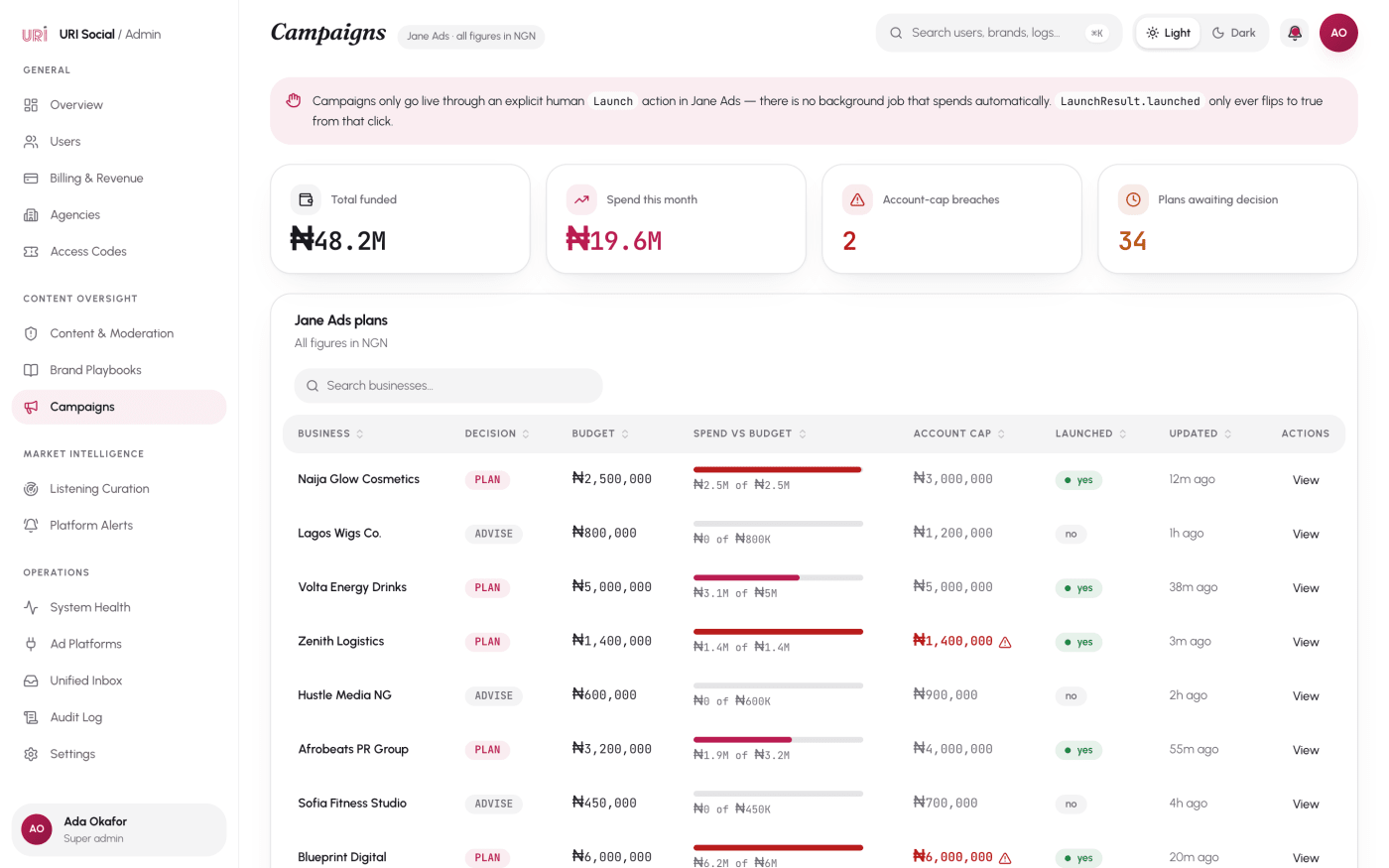
- Built safety into the screens: campaigns go live only by an explicit human launch, and budget-cap breaches are flagged
What changed.
What it achieved so far.
17 console sections
About 15,000 lines of strict TypeScript
Every admin action in the audit log
Chapter 01
The problem
As Uri grew, operations work happened in scattered admin screens and database queries: crediting a user after a bank transfer, reviewing flagged content, checking an ad budget breach, working out why an account looks the way it does. The console puts all of it in one place, with a record of who did what.
Chapter 02
Backend-ready from day one
I built the front end before the API, against typed sample data shaped exactly like the planned endpoints. Each section reads through one server-only function, so connecting the backend means replacing one function per feature with no changes to components. Operations got to use and critique the screens weeks earlier, and the backend team got a precise contract.
Chapter 03
Safe by design
Every credit adjustment, plan override, admin grant and moderation action is attributed in the audit log, so there is always an answer to "why does this account look like this?". Campaigns go live only through an explicit human launch, budget-cap breaches are flagged, and the sign-in requires a second factor.
Chapter 04
Built with
Next.js 16 with the App Router and Turbopack, strict TypeScript, shadcn/ui on Radix, Tailwind CSS v4, Framer Motion, TanStack Table, and React Hook Form with Zod.
More of Uri Admin Console.
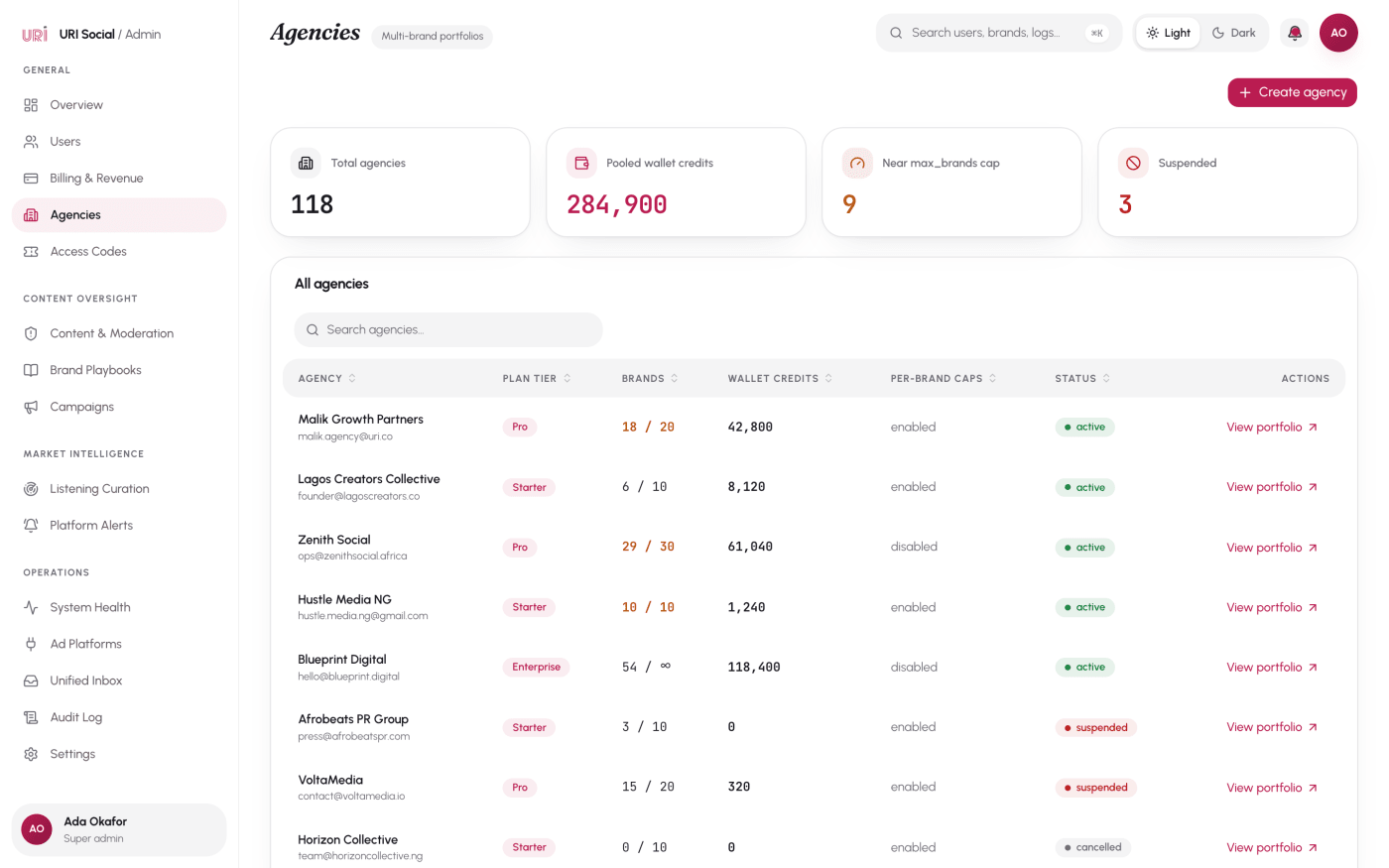
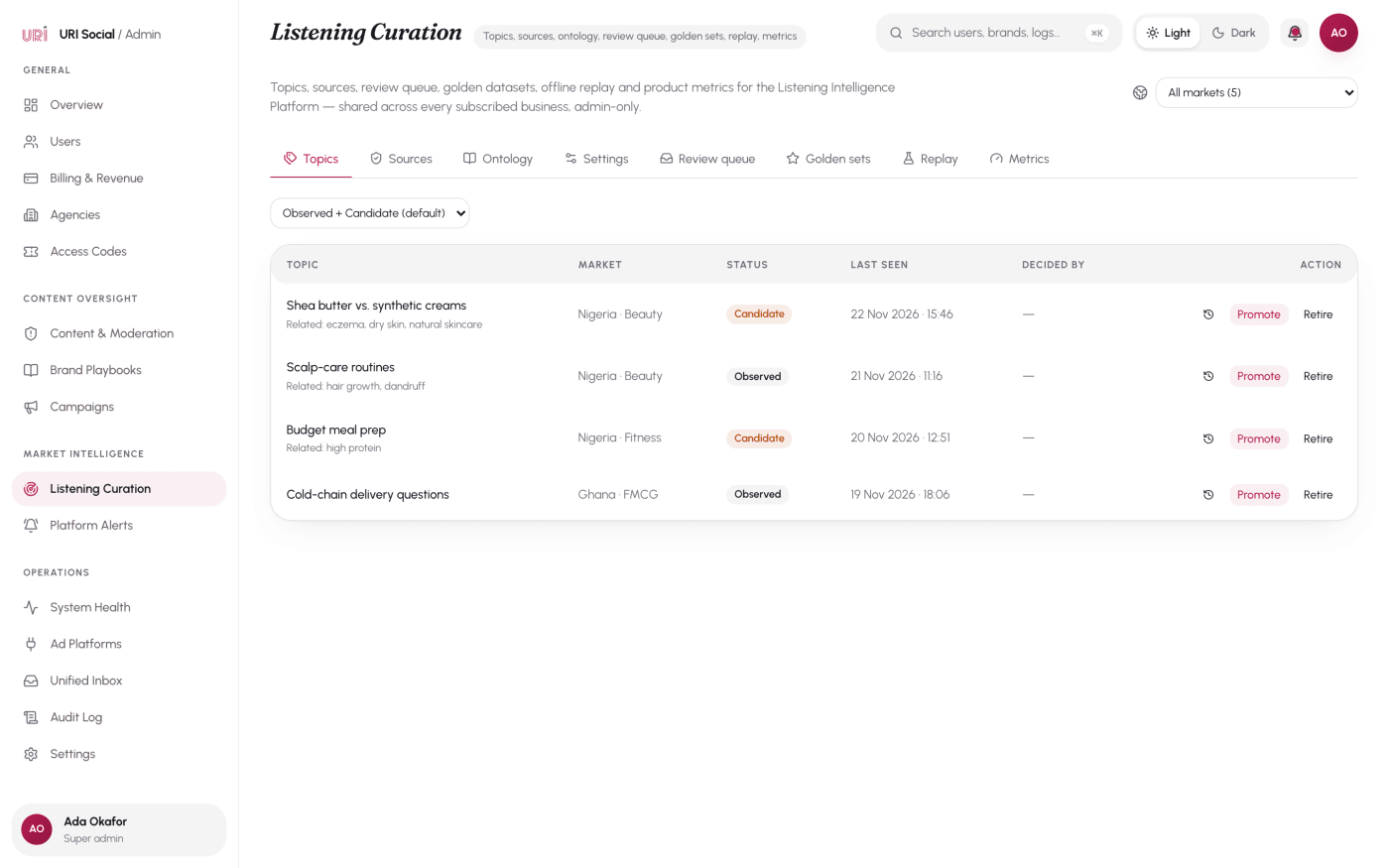
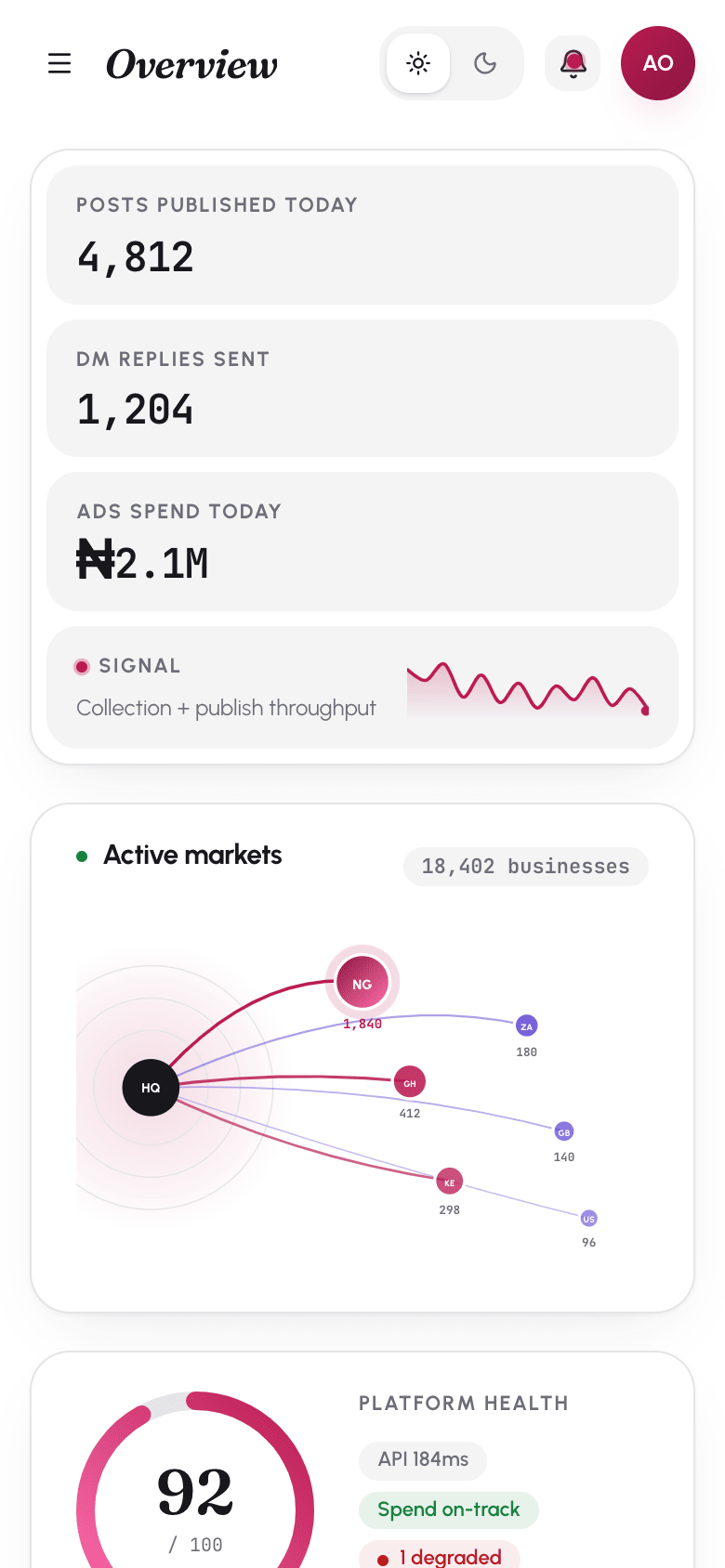
Users and their plans. Campaigns go live only by an explicit human launch. Moderation of AI-generated visuals. Platform health at a glance. Every admin action, attributed. Agencies and their brands. Curating Market Intelligence. The overview on a phone.