Developer platform · SDKBackend / API
URI Developer Platform
The Uri SDK lets other software companies build Uri's AI content, scheduling, publishing and analytics into their own products, in TypeScript, Python or React, through an API gateway that handles keys, usage and billing, with a developer portal and docs.
- Status
- In progress
- Built for
- Uri
- Role
- CTO: designed and published the SDK packages; built the developer portal; co-built the gateway
- Timeline
- Nov 2025 – present

Built with
- TypeScript
- Python
- React
- FastAPI
- MongoDB
- Next.js
- npm
- PyPI
The evidence
My part
CTO: designed and published the SDK packages; built the developer portal; co-built the gateway
- Reviewed and supervised all of it as CTO: where a colleague built the backend, it was built under my review; I revamped the interface and fixed most of the bugs
- Designed, wrote and published all three client packages: TypeScript, Python and React
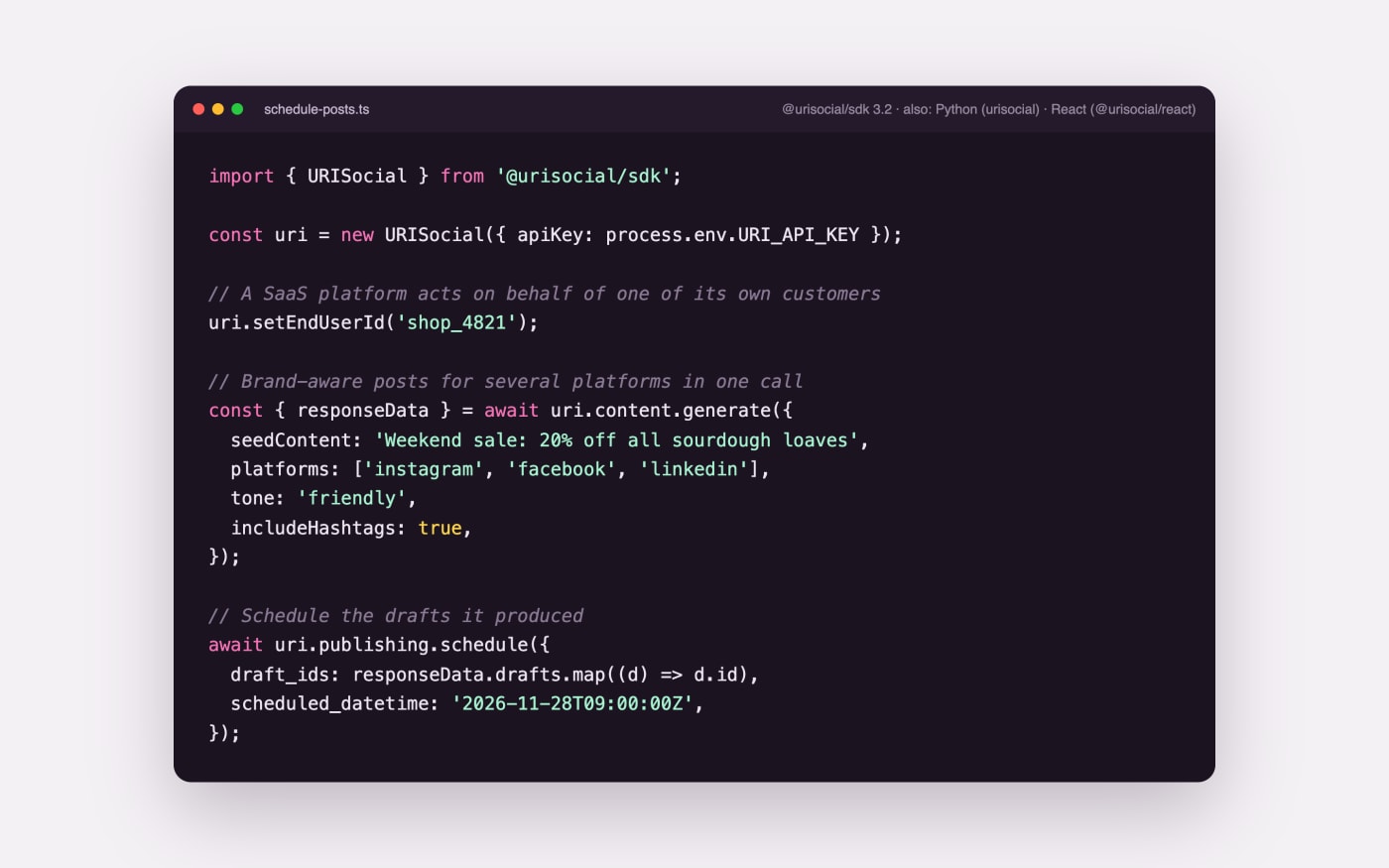
- Designed multi-tenant support (v3.0): one key, with every call scoped to the platform's end customer
- Mirrored 18 resource groups across TypeScript and Python, with React hooks and components on top
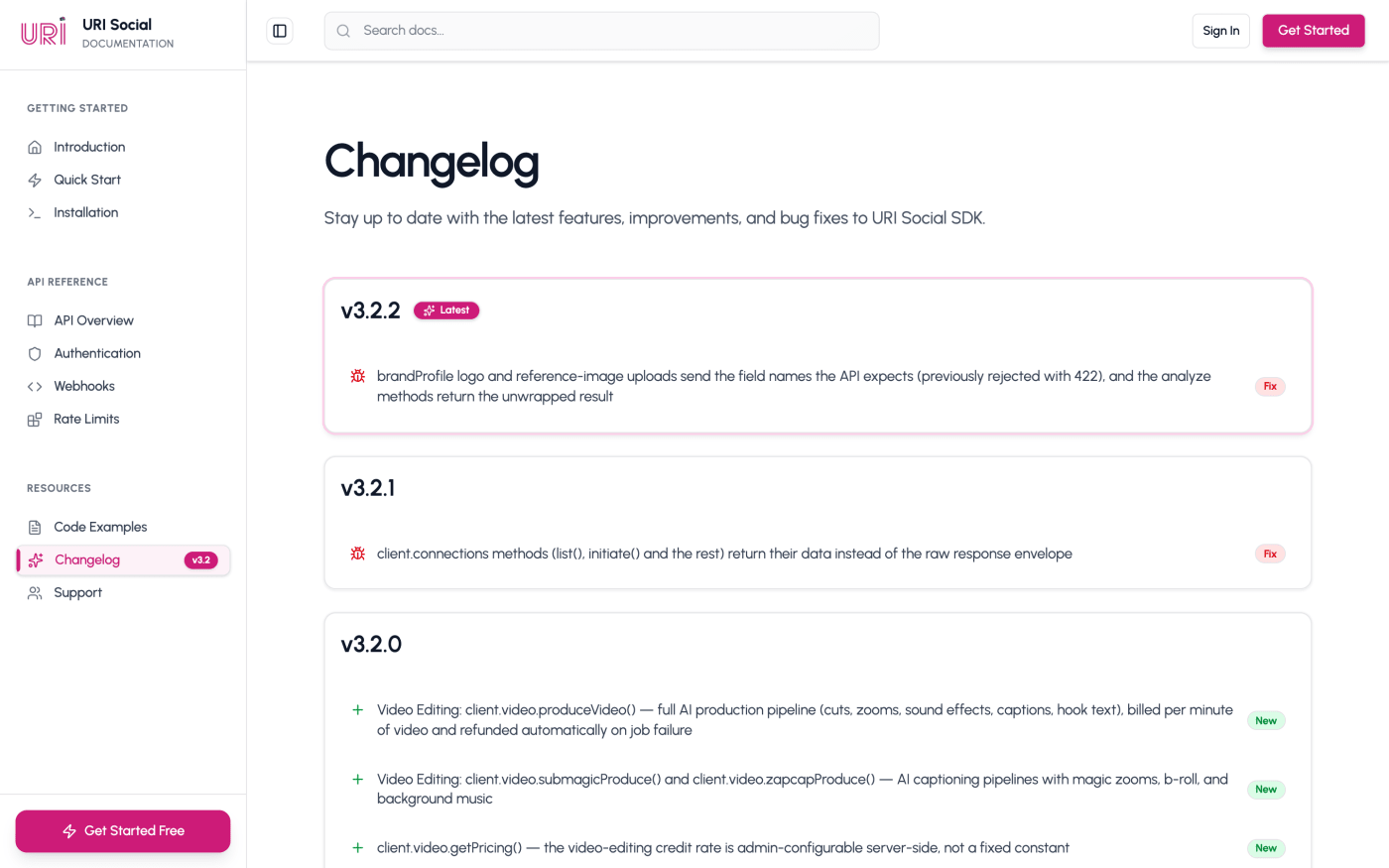
- Audited every resource against the live backend and fixed the mismatches in the 3.1 and 3.2 releases
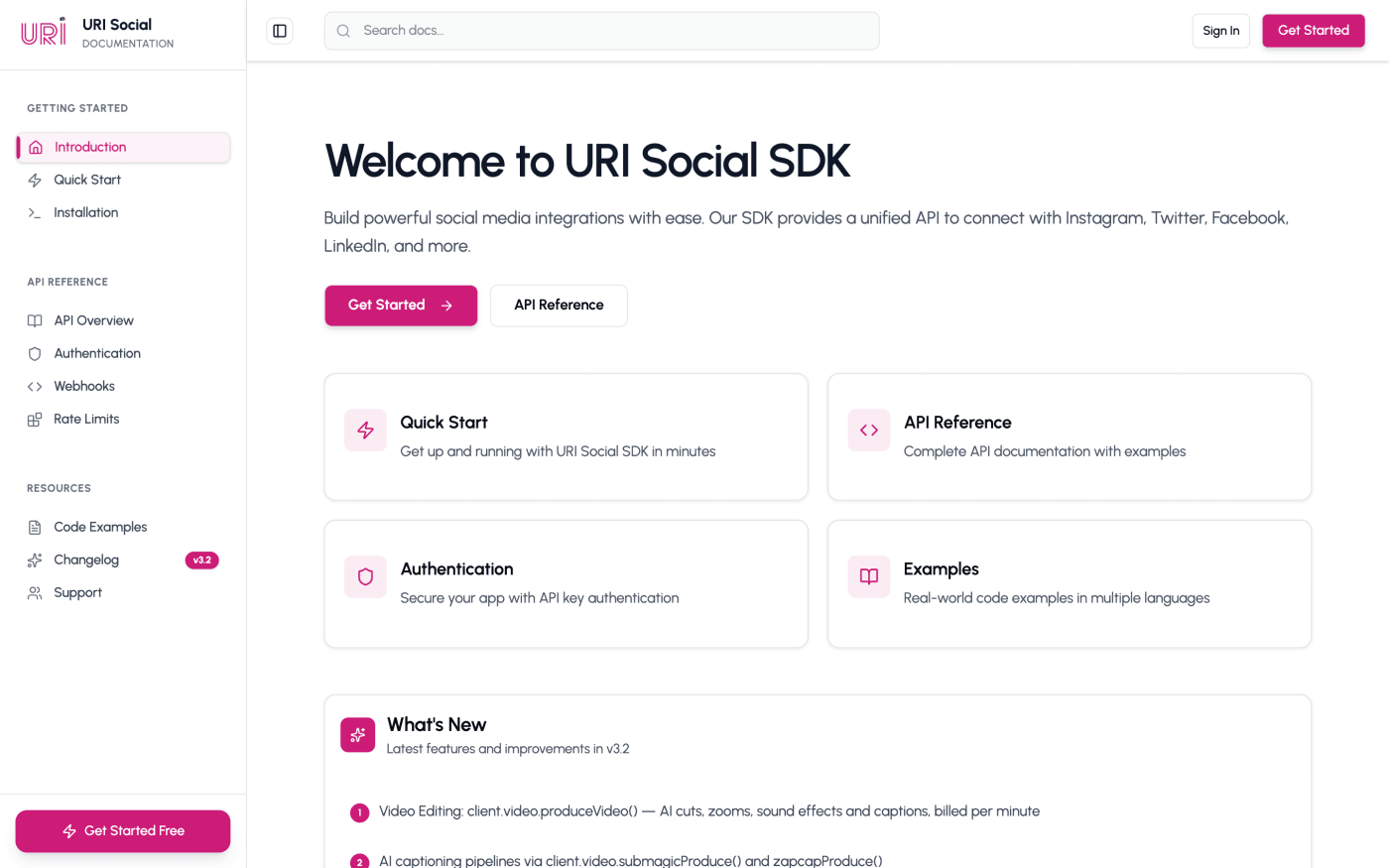
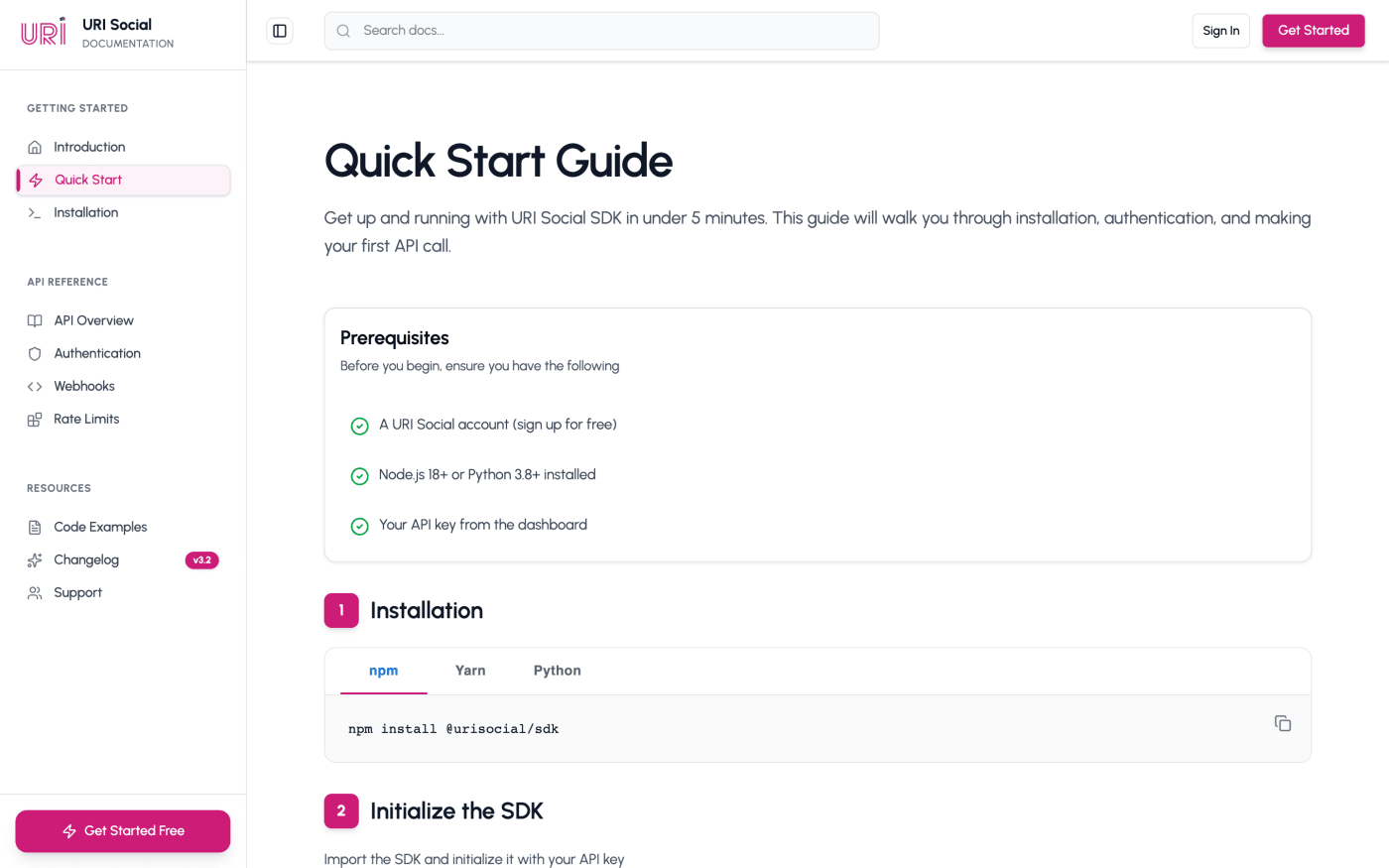
- Built the developer portal: landing page, docs, API-key and webhook dashboards, and billing
- Built the playground, a sample app that runs the SDK end to end
- In the gateway: built credit-based multi-currency billing, usage tracking and webhook events; a colleague wrote most of its other commits, to my design and under my review
What changed.
What it achieved so far.
@urisocial/sdk 3.2.2 and @urisocial/react 3.1.1 on npm; uris
18 resource groups in TypeScript and Python
About 195 TypeScript and 150 Python methods
Multi-tenant since 3.0
Chapter 01
The problem
Agencies and software platforms wanted Uri's capabilities inside their own products, for their own customers. That needs stable client libraries, an API key per developer, usage metering and billing, documentation, and a way for one platform to act for many customers without mixing their data.
Chapter 02
Under my review
As CTO I review every change to Uri's code. Where a colleague built a part, they built it under my review and supervision. I also led the revamp of the interface and fixed most of the bugs. Uri began as Uri Creative in November 2025, and this product grew out of that work.
Chapter 03
One key, many customers
In version 3.0 a platform sets its end customer's ID on the client, and every call is scoped to that customer's brand, drafts and connections. The platform manages one key instead of thousands, and isolation is enforced on the server. This is what made the SDK usable by software platforms, not just single businesses.
Chapter 04
Making the SDK match reality
Hand-written clients are idiomatic in each language but drift from the API. In 3.1 and 3.2 I audited every resource against the live backend and fixed what had drifted (wrong endpoints, unwrapped responses, multipart uploads missing in Python), added video editing, and shipped the fixes as point releases with a changelog.
Chapter 05
A gateway in front
Keys, scopes, rate limits, rotation, metering and billing live in a separate gateway rather than in Uri's core API. It is another service to run, but the core product stays free of partner concerns, and a partner can be rate-limited or cut off without touching it.
Chapter 06
Built with
TypeScript built with tsup, Python packaging and React for the clients; FastAPI with Beanie on MongoDB for the gateway; Next.js 16 for the portal and playground.
More of URI Developer Platform.
Typical use: one key, scoped to an end customer. The multi-tenant API I designed. The documentation, built by me. Quick start in TypeScript or Python. The 3.x releases I shipped.